The Trust-Killer: Why Fake Urgency is Destroying Your D2C Brand
Home Blog D2C
By: Kirtika Srivastava Published: Jul 16, 2026
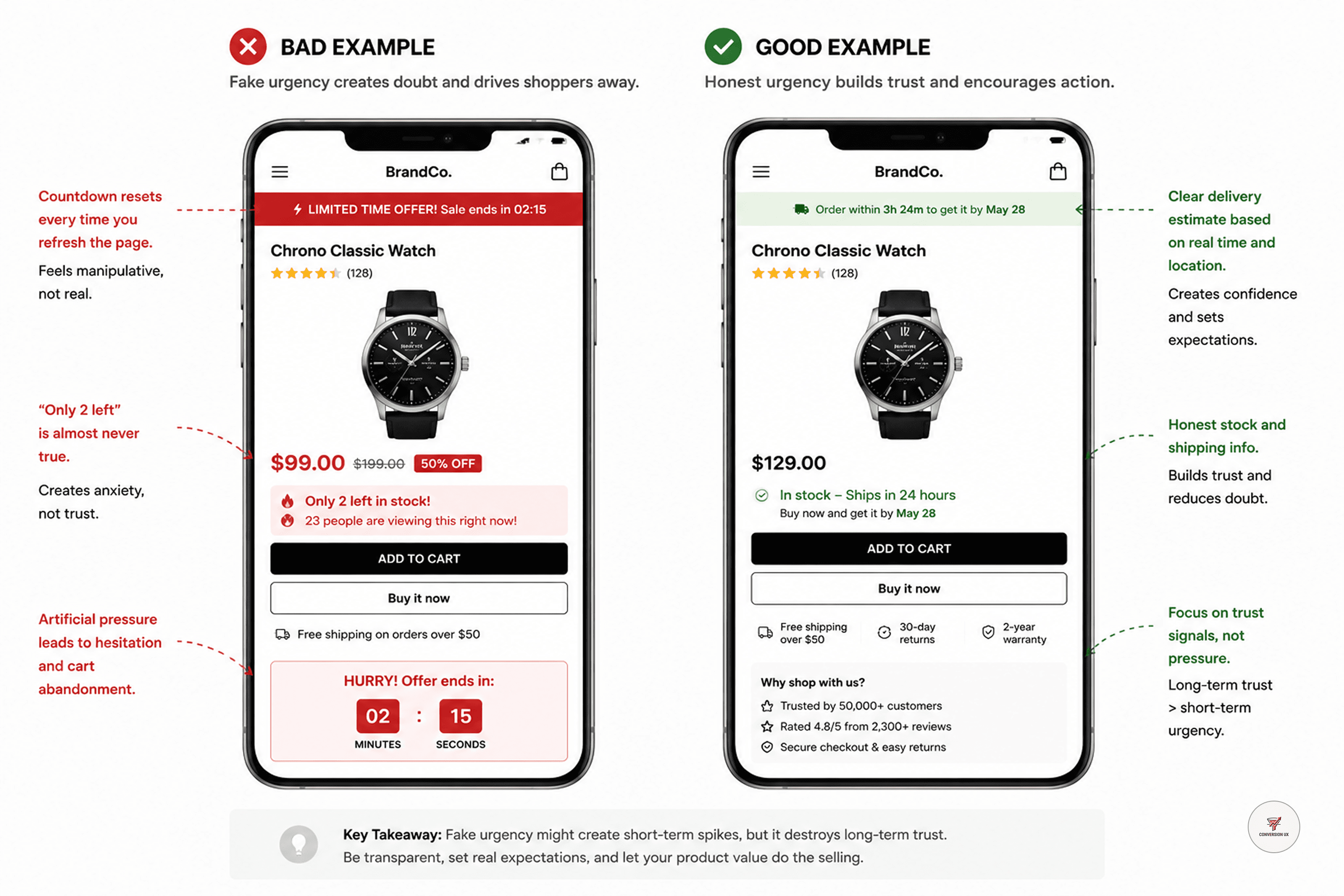
In the rush to boost conversion rates, many D2C brands turn to "scarcity tactics" that feel more like a trap than a service. We've all seen them: the countdown timer that resets every time you refresh the page, or the "Only 1 left in stock!" notification that never changes. While these might give you a temporary spike in clicks, they are doing long-term damage to your brand’s most valuable asset: Trust.
1. The Psychology of "Borrowed" Trust
Humans have a highly tuned radar for manipulation. When a user realizes that your "limited-time offer" is fake, their brain instantly switches from "Curious Buyer" to "Skeptical Researcher." Once you lose that trust, no amount of discount or fancy UX can bring it back. Using AI-generated fake urgency is the fastest way to lose a customer who might have otherwise stayed with you for years.
2. Authentic Scarcity vs. Manufactured Urgency
Manufactured Urgency (The Trap): Countdown timers that don't actually end, or generic "Flash Sale" banners that run every day. This creates "Ad Fatigue" and annoyance.
Authentic Scarcity (The Conversion Driver): This is based on reality. Does a specific product really have low inventory? Is this offer actually only for your newsletter subscribers? When the scarcity is real, the user feels a genuine need to act, and they don't feel manipulated.
3. How to Engineer Urgency Without the Sleaze
Transparency is the new Sales Tactic: Instead of "Only 1 left," try "We have 3 units remaining in our warehouse." Being specific feels human and honest.
Event-Based Urgency: Link your offers to real brand moments—like a seasonal restock, a product launch, or a birthday sale. This creates excitement rather than anxiety.
Reward Loyal Intent: Use urgency to reward the people already in your ecosystem (your email list), not just random ad traffic. It makes your audience feel like "insiders" rather than targets.
Conclusion
Your conversion rate isn't just a math problem; it’s a relationship status. When you use sleazy tactics, you are telling your customer that you don't respect their intelligence. If you want to scale a long-term brand, stop "hacking" the human brain with fake tricks and start "engineering" a path that makes the purchase feel like the most logical, natural decision they could make.
Join the CurvWave UX & CRO Insights newsletter
Marketing strategy is moving away from gut feelings toward data-backed engineering. What matters now is how well you can optimize for human behavior in a crowded market.
The growth operators pulling ahead are the ones building systems to identify friction, map user psychology, and automate conversion flows. At the same time, maintaining a high-converting funnel has become a massive challenge because testing variables takes time—and most brands lack the bandwidth to do it effectively.
That’s why I built CurvWave UX & CRO Insights: to help D2C founders and growth teams move from "guessing" to "engineering" their success. Every week, I share 3-4 deep-dives covering UX audits, funnel psychology, and AI-driven workflow experiments that you can implement immediately.
You can join the newsletter here
Kirtika Srivastava
Kirtika is the founder of CurvWave and the voice behind the CurvWave UX & CRO Insights newsletter. She specializes in the intersection of human psychology and AI-driven conversion engineering. With a deep focus on UX audits and CRO, she helps high-growth D2C brands identify invisible friction and transform it into measurable revenue. She is also the author of ‘UX Decoded’ and ‘Design Mastery’.